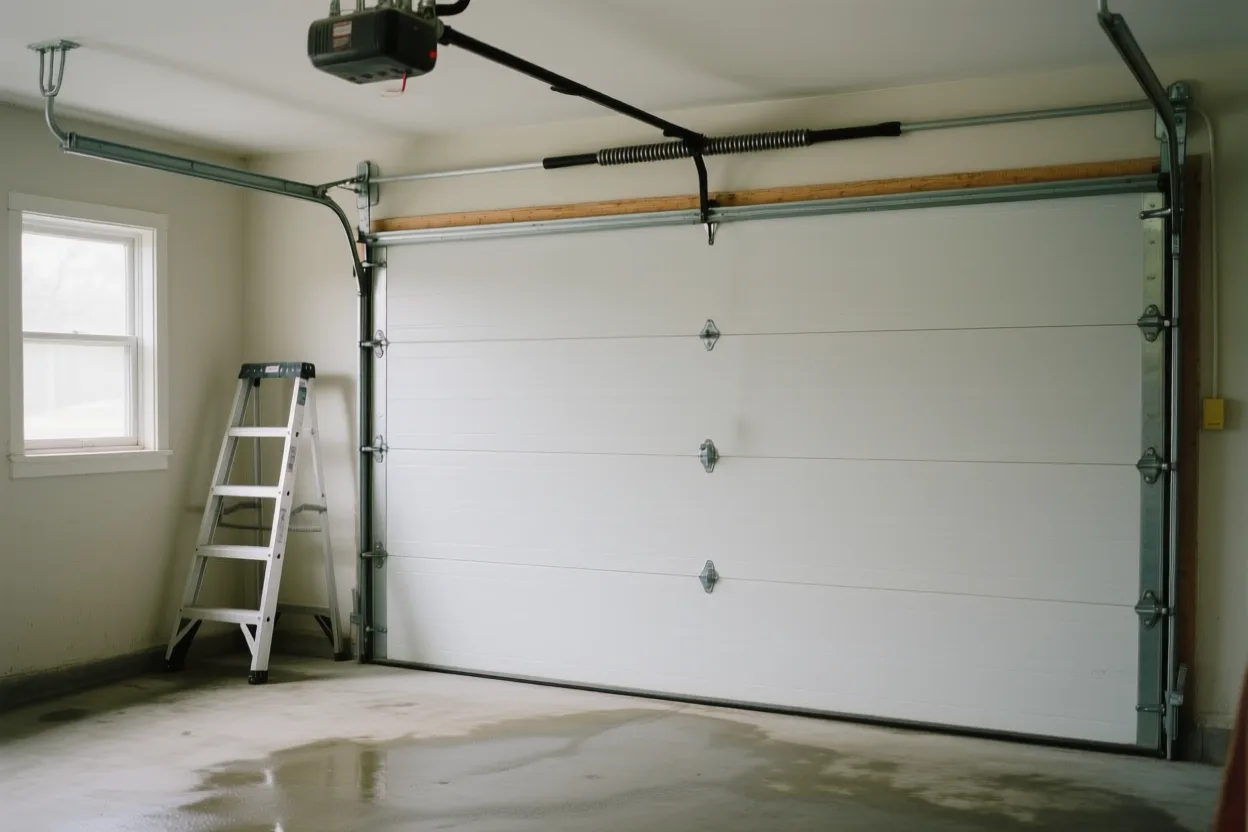
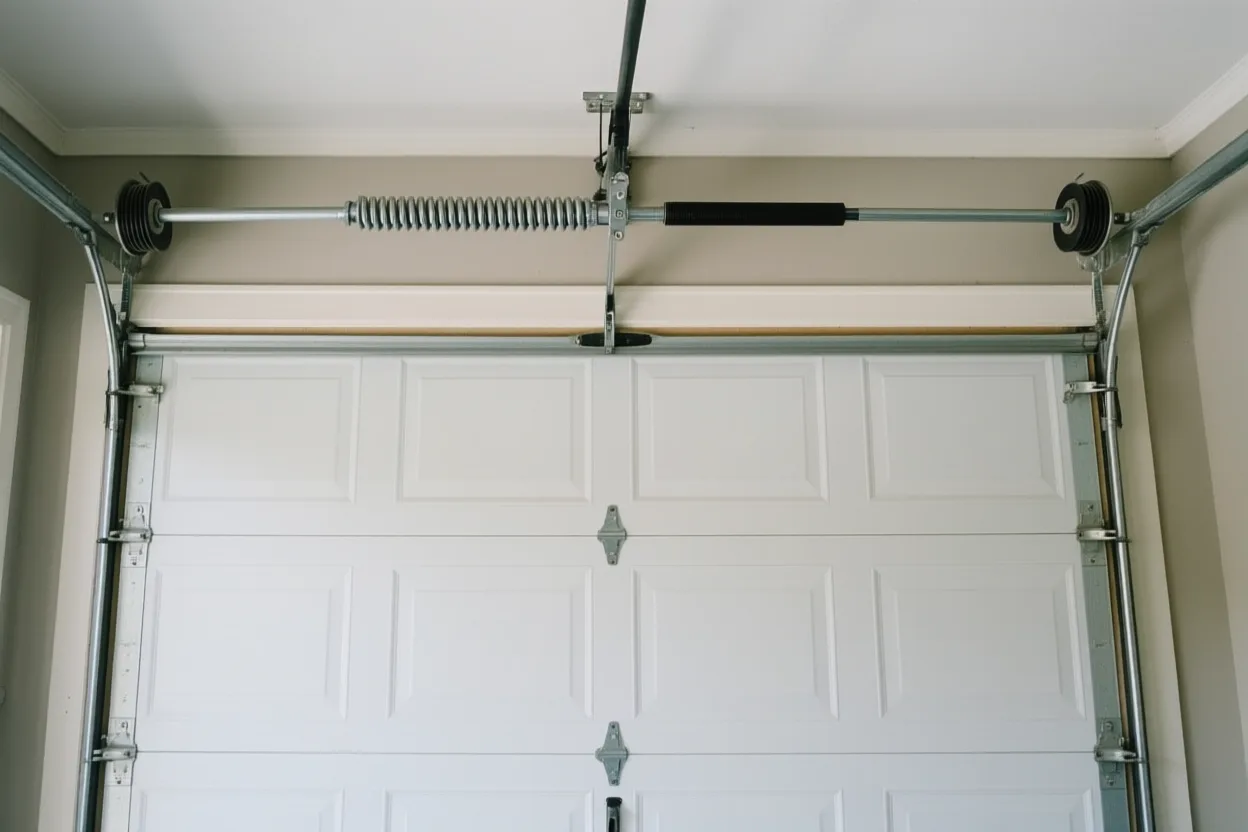
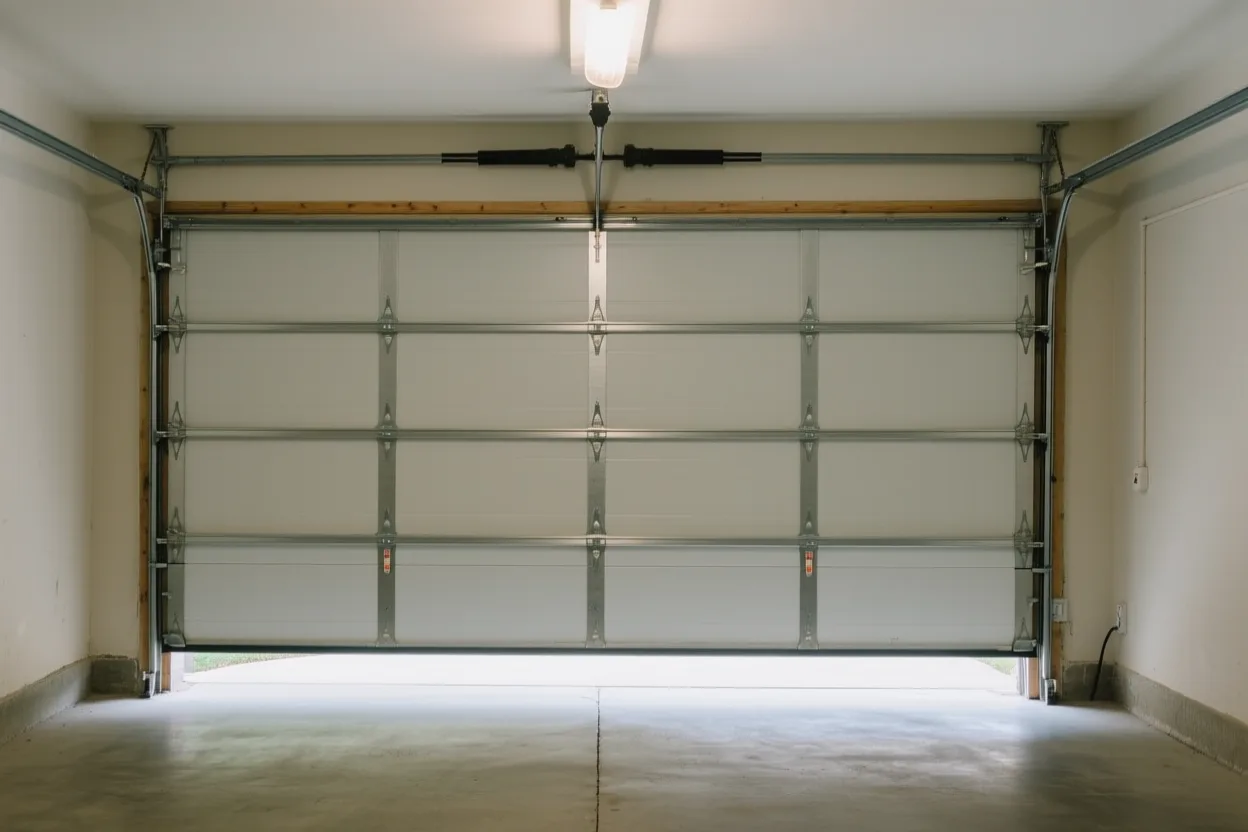
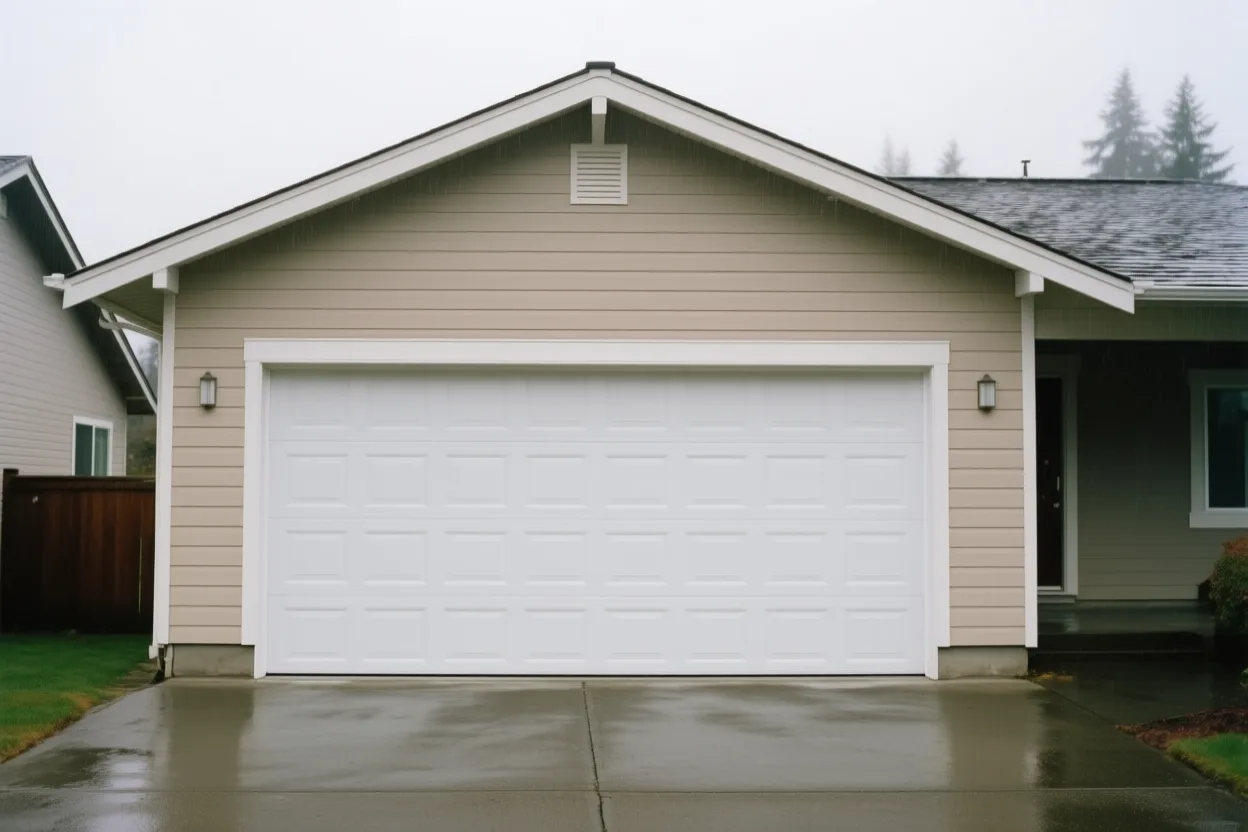
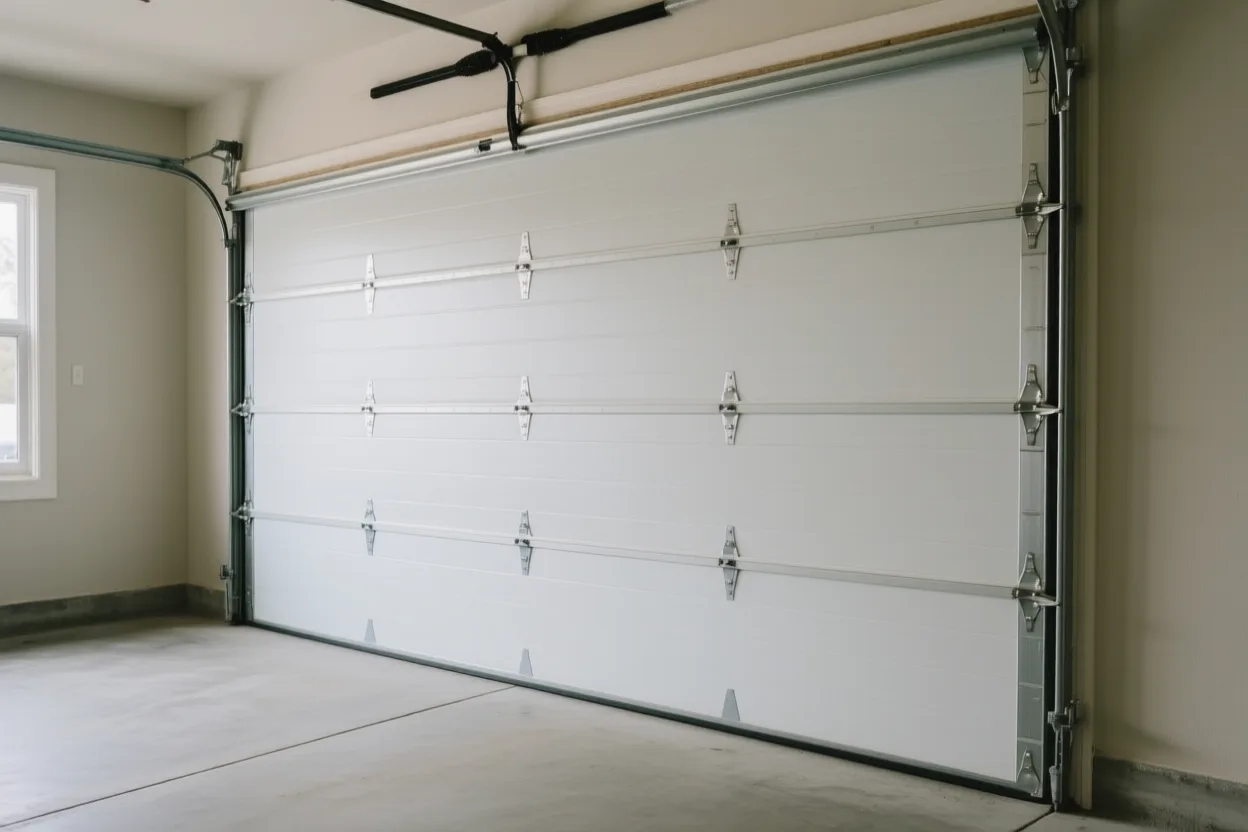
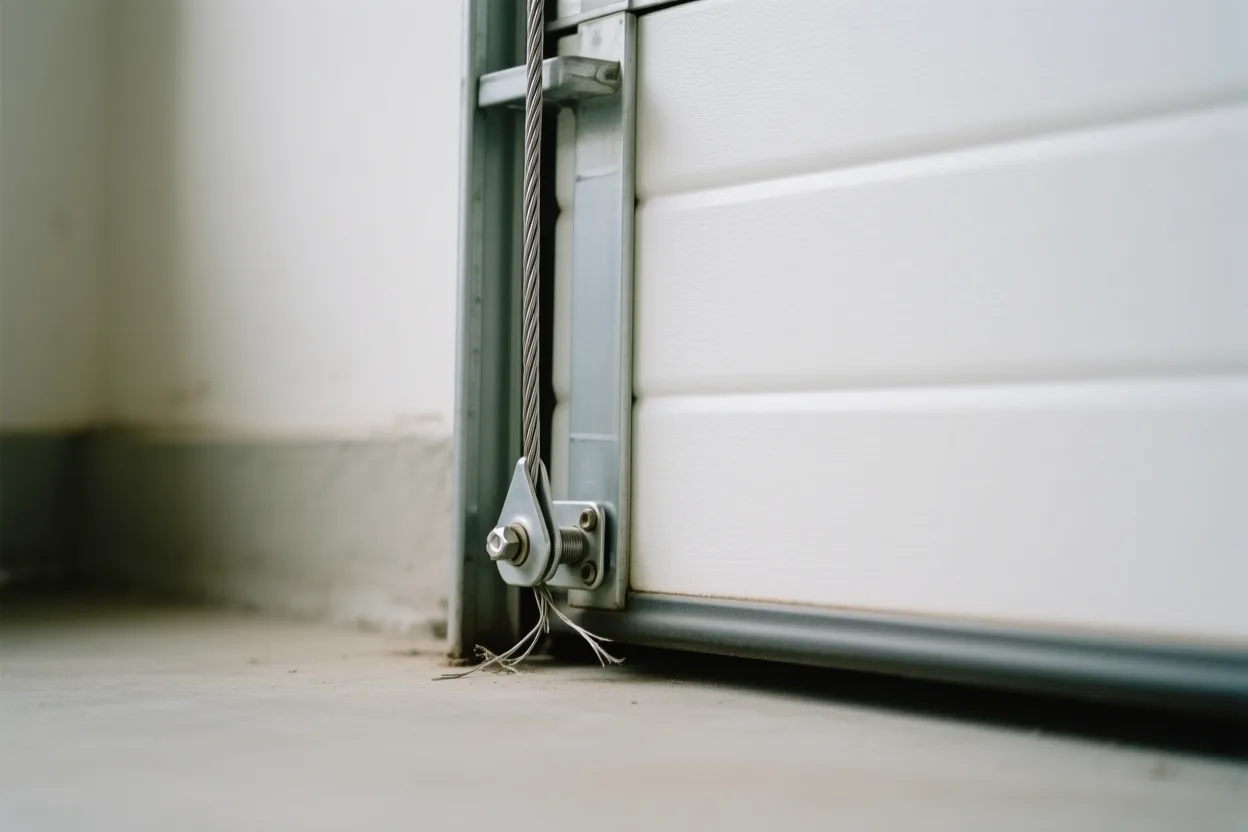
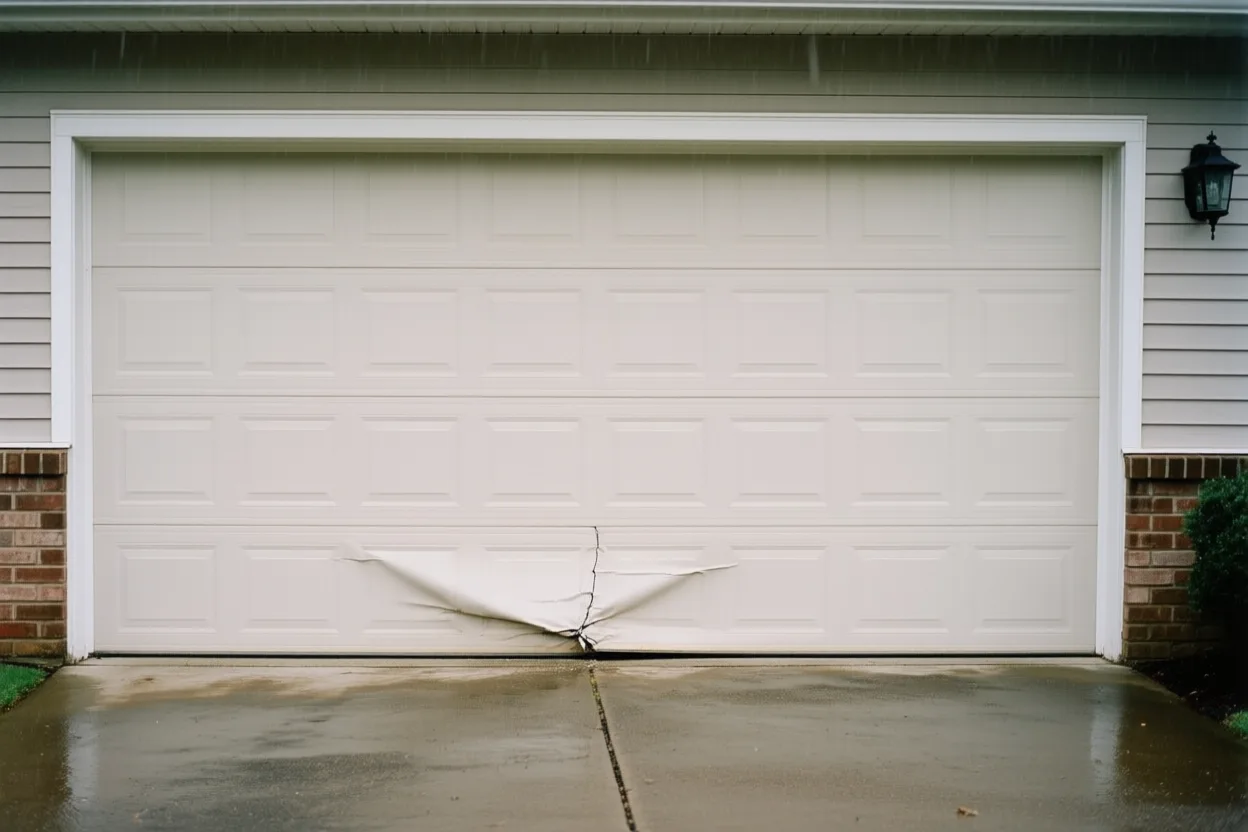
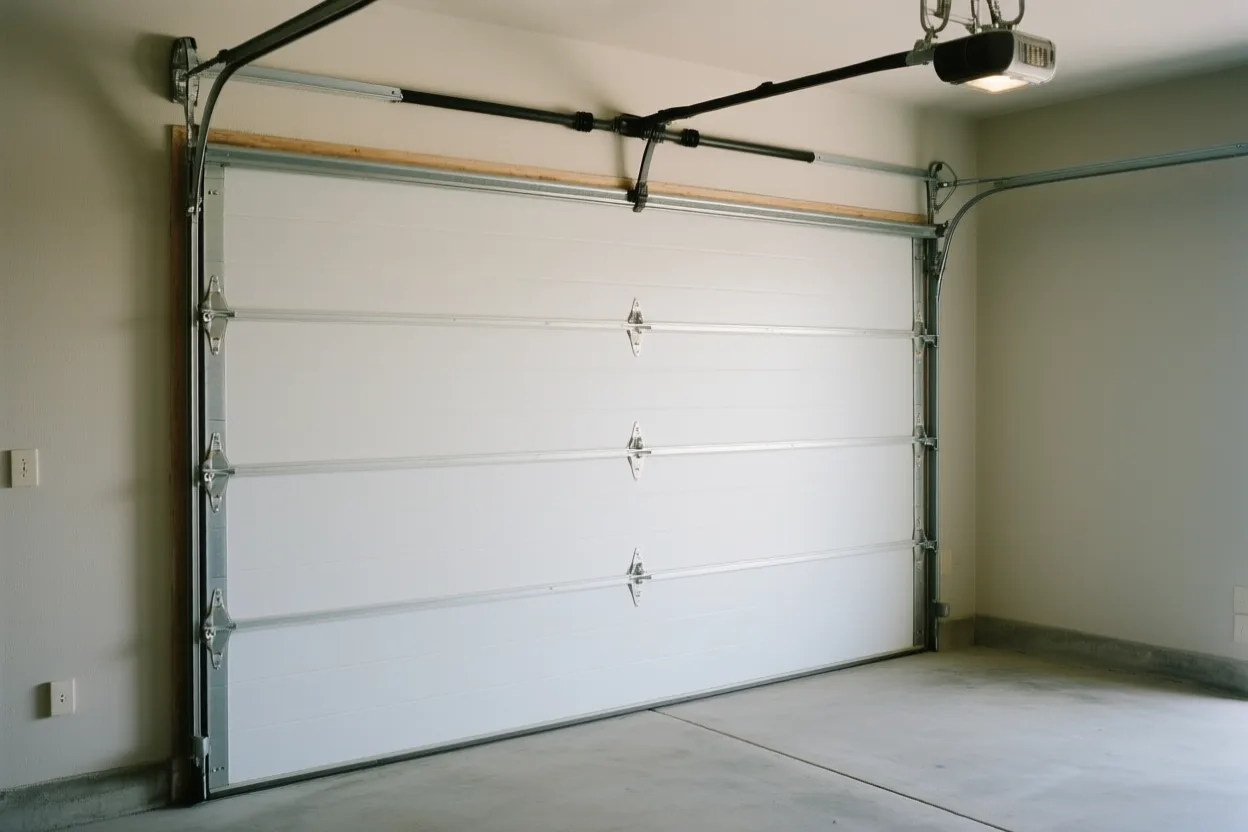
The seal around the door is the unglamorous part that does a lot of work in a wet climate. The rubber gasket on the bottom of the door, the vinyl stops along the sides and top, and sometimes a threshold seal on the floor itself. When they crack, compress, or pull away, water gets in, drafts follow, and in cold snaps the garage becomes an icebox that freezes pipes and chills the rooms above.
What wears out
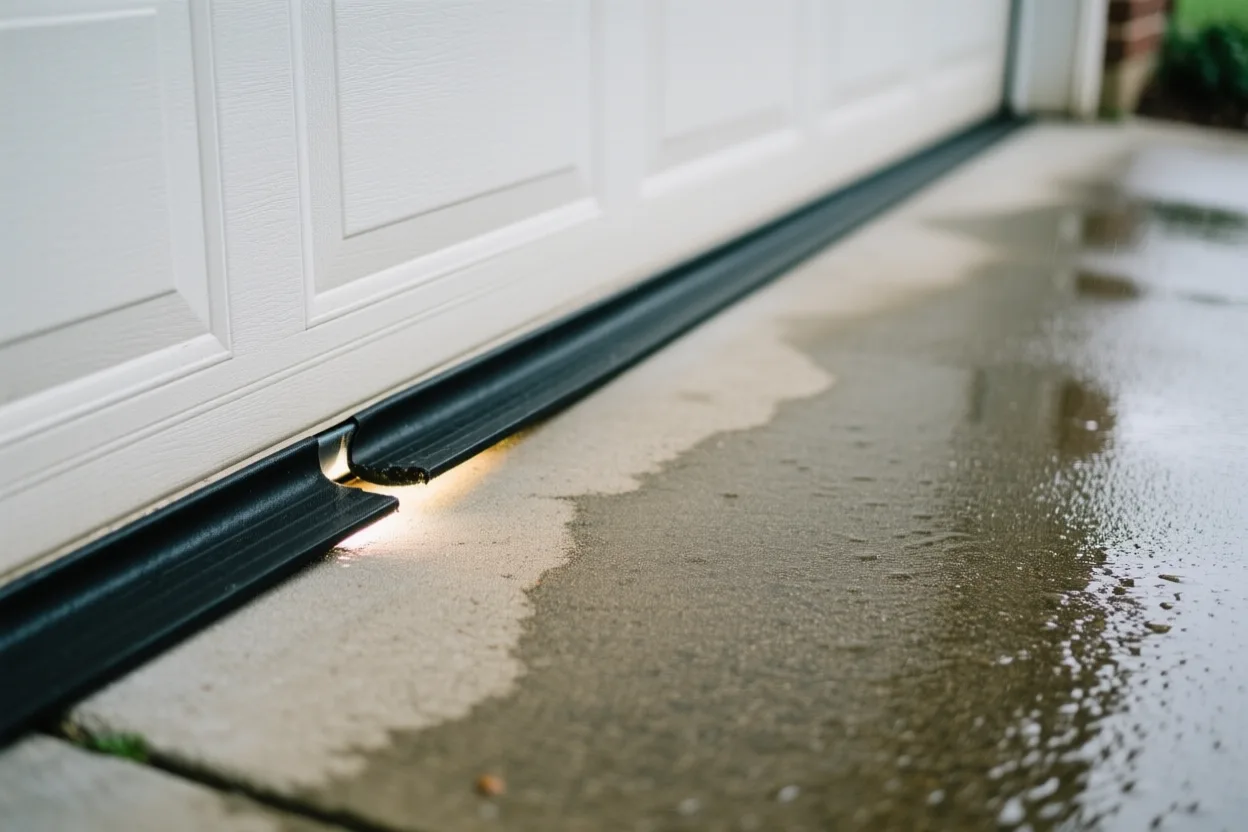
Bottom seal, the rubber gasket that contacts the floor; it compresses, cracks, and lets water wick under the door
Perimeter stops, the vinyl strips along the sides and top that seal the opening when closed
Threshold seal, the rubber strip adhered to the floor for openings that sit in drainage or slope
Section joints, the seals between door panels that keep wind and water out of the gaps
Why it matters here
King County gets its rain seasonally but heavily, and a garage door that leaks at the bottom floods the slab every storm. On an attached garage the seal is also the thermal boundary; a failing seal makes the room above the garage noticeably colder and the garage itself unusable as a workshop in winter.
The fix that is not just the seal
If the bottom seal keeps failing early, the cause is often the door or the floor, not the gasket. An uneven floor, a door out of level, or a track that lets the door sit crooked all chew through seals. A good seal job checks the fit and the door's set, not just the gasket it leaves behind.
What the job involves
Pull the old seal, clean the retainer or the concrete, fit the new gasket, and check the door's contact all the way across. On perimeter stops the wood stops sometimes get replaced along with the vinyl. It is one of the cheaper repairs on the list and one of the ones that pays back the most in comfort and water kept out.