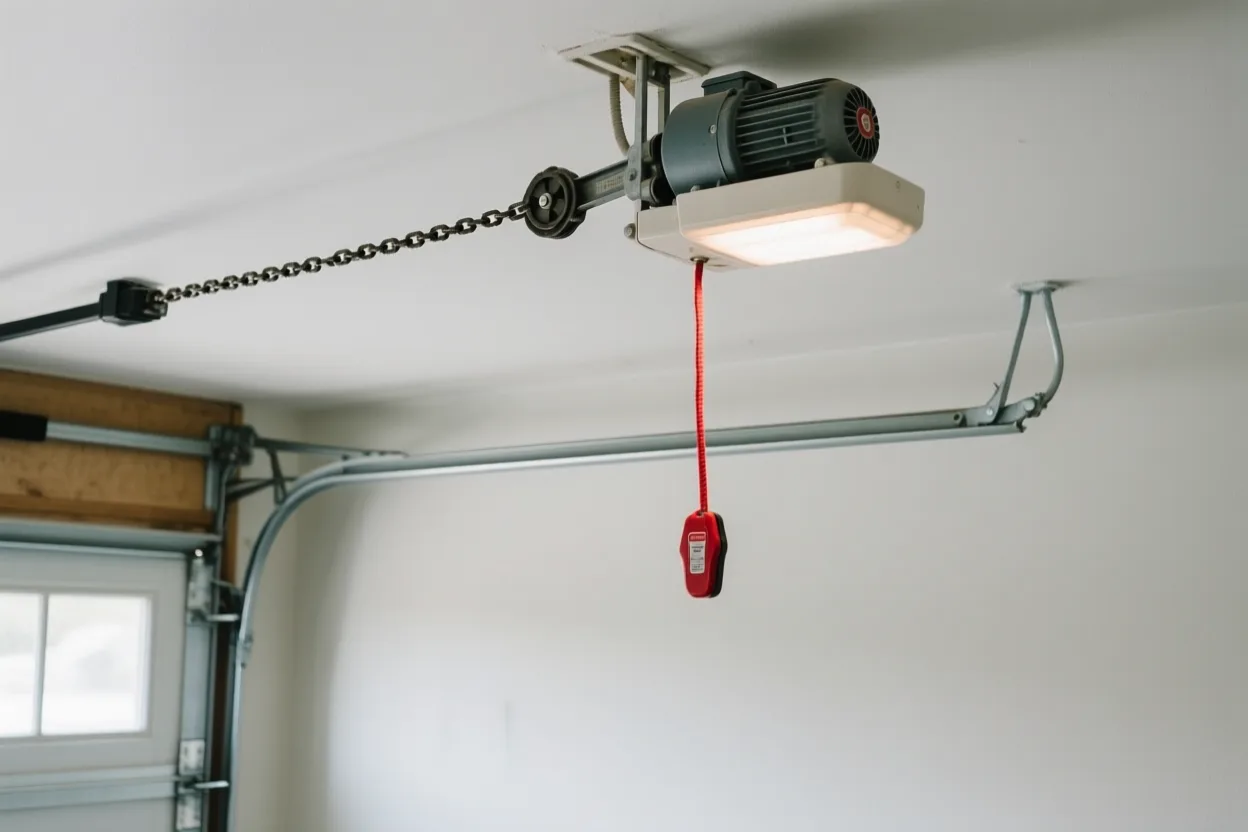
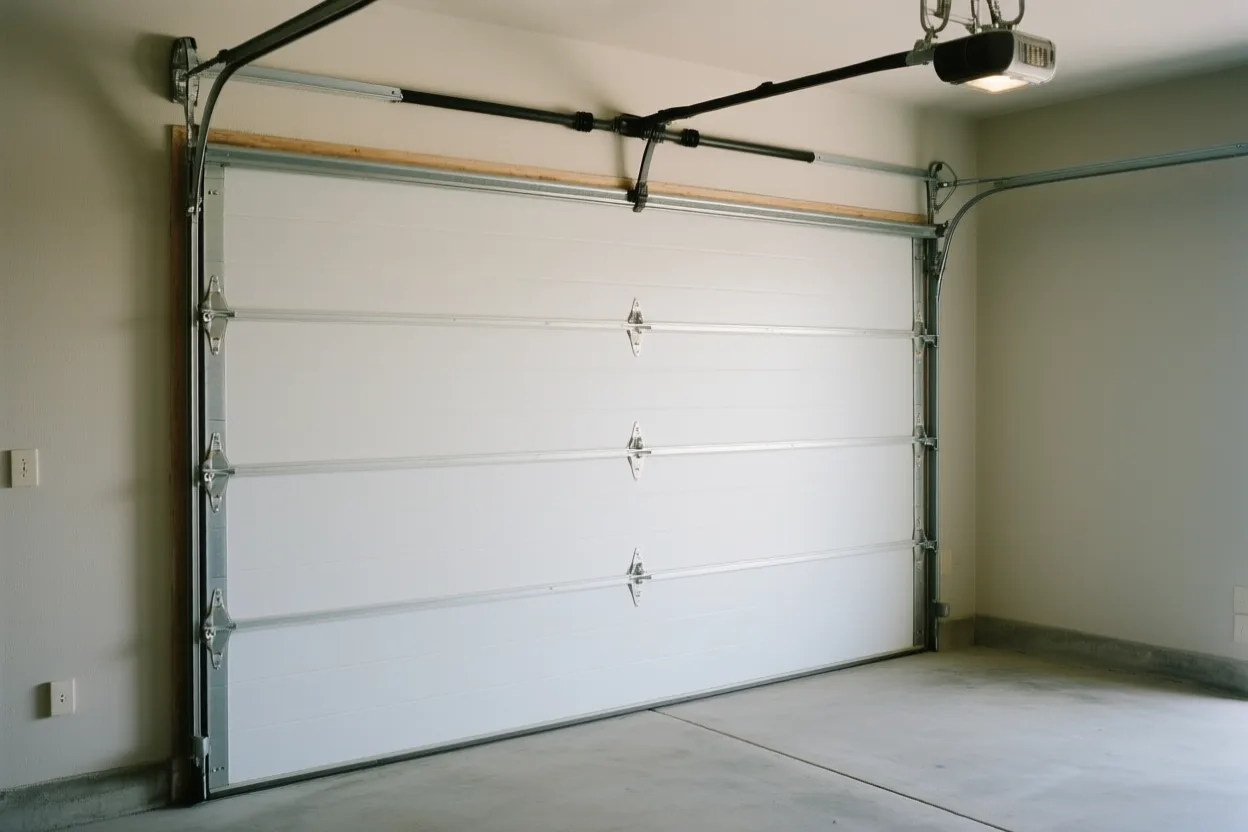
The opener is the most complicated part of the system and the part that fails in the most ways. Dead motors, stripped drive gears, logic boards killed by power surges, safety sensors knocked out of alignment, remotes that lost their programming. Some of it is a five minute fix, some of it is a replace.
What usually goes wrong
Sensors knocked out of alignment, the door starts down and immediately reverses; the number one "broken" opener call and often the cheapest fix
Stripped drive gear, the motor runs and the chain or belt moves nothing; a wear-out part on units over ten years
Dead logic board, the opener ignores everything; usually from a surge and usually means a new unit
Failing motor, slow, straining, or overheating; the opener is working too hard on an unbalanced door or dying outright
Remote and keypad problems, dead batteries, lost programming, or a receiver that stopped listening
Repair or replace?
On a unit under ten years, a gear kit or sensor realignment usually makes sense. On a fifteen-plus-year-old chain-drive with a dead board, the money is often better spent on a new opener that is quieter, has a battery backup, and works from a phone. The tech who calls should tell you which side yours falls on, not just sell you a new unit because it is easier.
What a new opener gets you
Quiet belt-drive operation, battery backup for the outages we get every winter storm season, rolling-code remotes, and app control. If the door also has a detached workshop or a bedroom over the garage, the noise difference alone usually justifies the upgrade.
The part that matters most
A new opener on an unbalanced or binding door will die early doing work it was never meant to do. The opener is a controller, not a crane; the springs carry the weight. A good install includes balancing the door first, which is part of why a pro does this job instead of a hardware-store DIY.