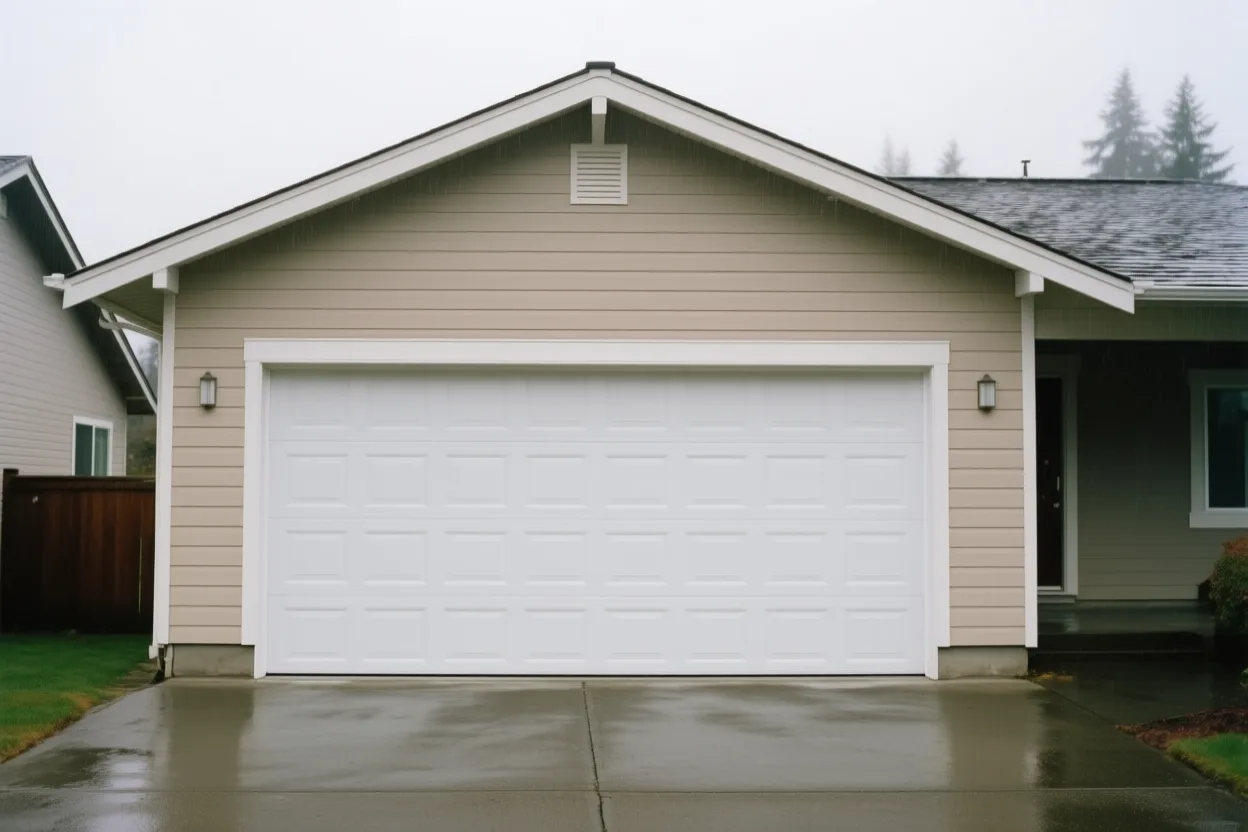
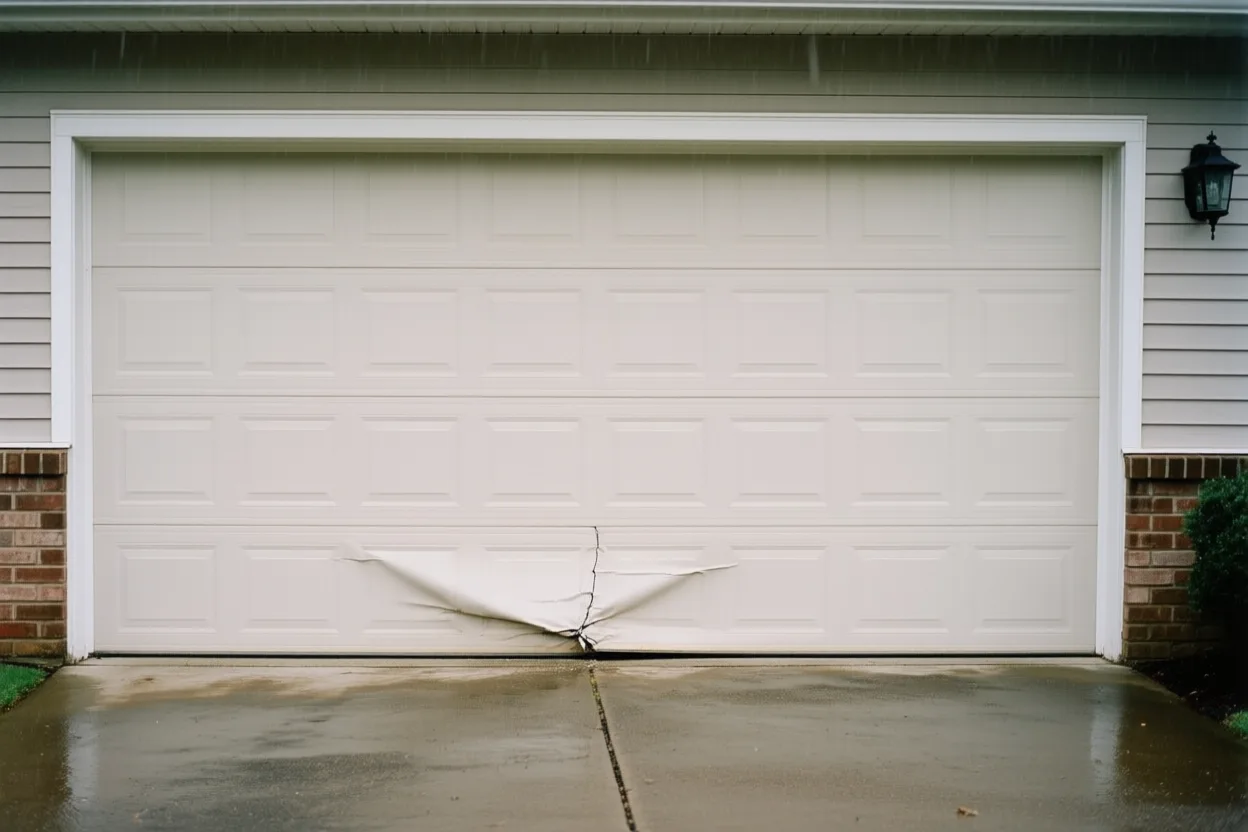
A dented or creased panel is the call that sounds simple and sometimes is. If the door is a current model and the damage is one section, a panel swap is a real option and a lot cheaper than a new door. If the model is discontinued, the damage is structural, or more than a couple panels are involved, the math shifts toward replacement.
When one panel is enough
A vehicle bumped the bottom section and creased it, but the rest of the door is fine
A single panel got dented by a bike, ball, or equipment falling against it
The damage is cosmetic but the panel is not cracked through or bent at the edges
When the whole door makes more sense
The model is discontinued and matching panels cannot be sourced
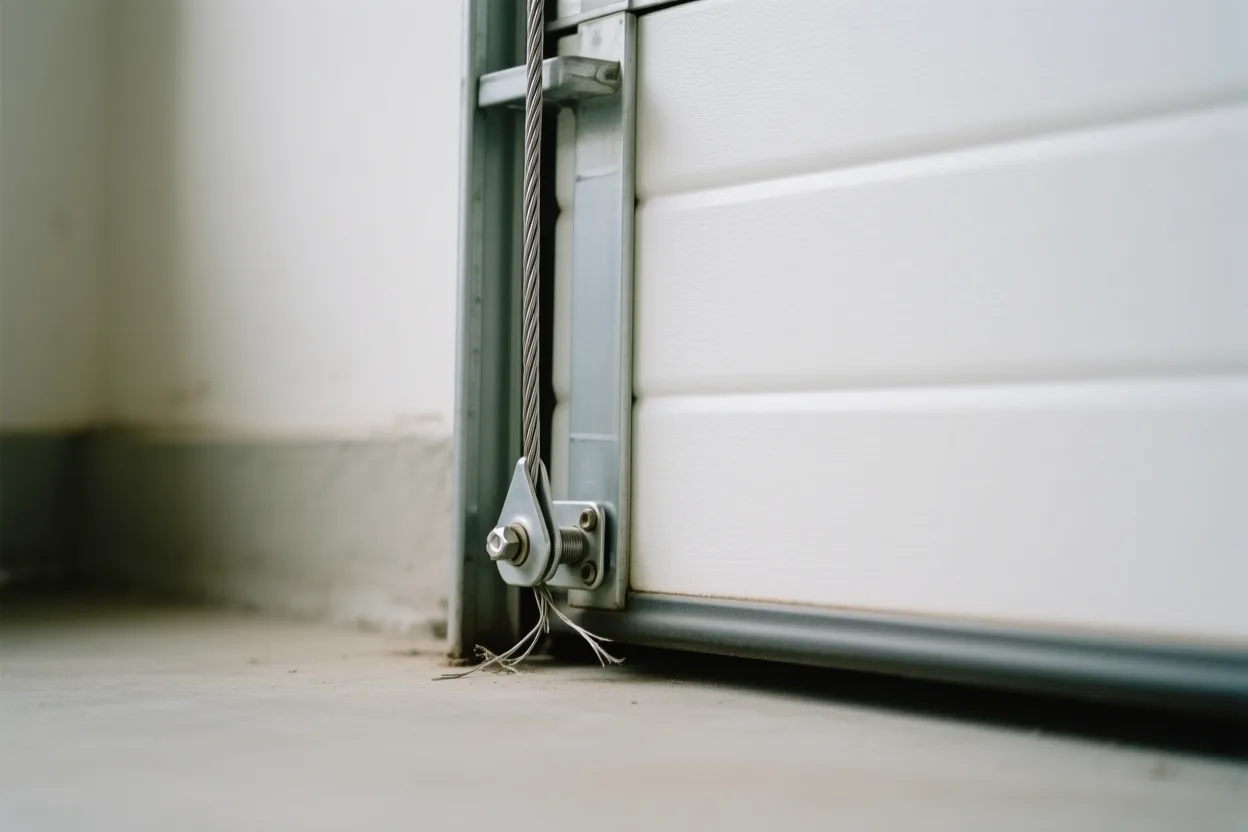
The panel is bent at the hinge points or the crease runs across a structural rib
Multiple panels are damaged, at which point panel cost plus labor approaches new-door cost
The door is already old and tired; one new panel on a worn door is money on a losing side
The matching problem
Even on a current model, a new panel will look slightly newer than the rest of the door for a while, different fade and different wear. On a door that has been painted or is a less common style, the match gets harder. A good pro tells you upfront whether a clean match is realistic or whether the patch will always show.
What the job looks like
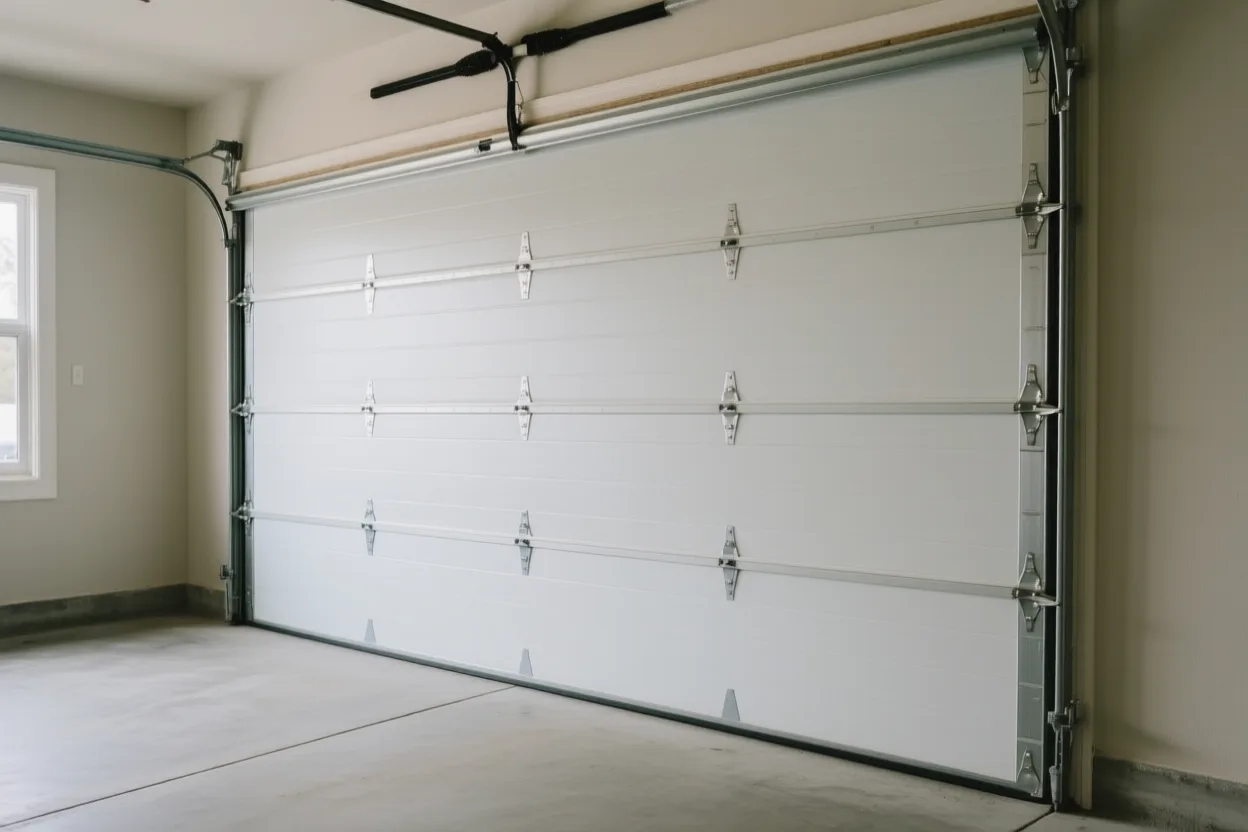
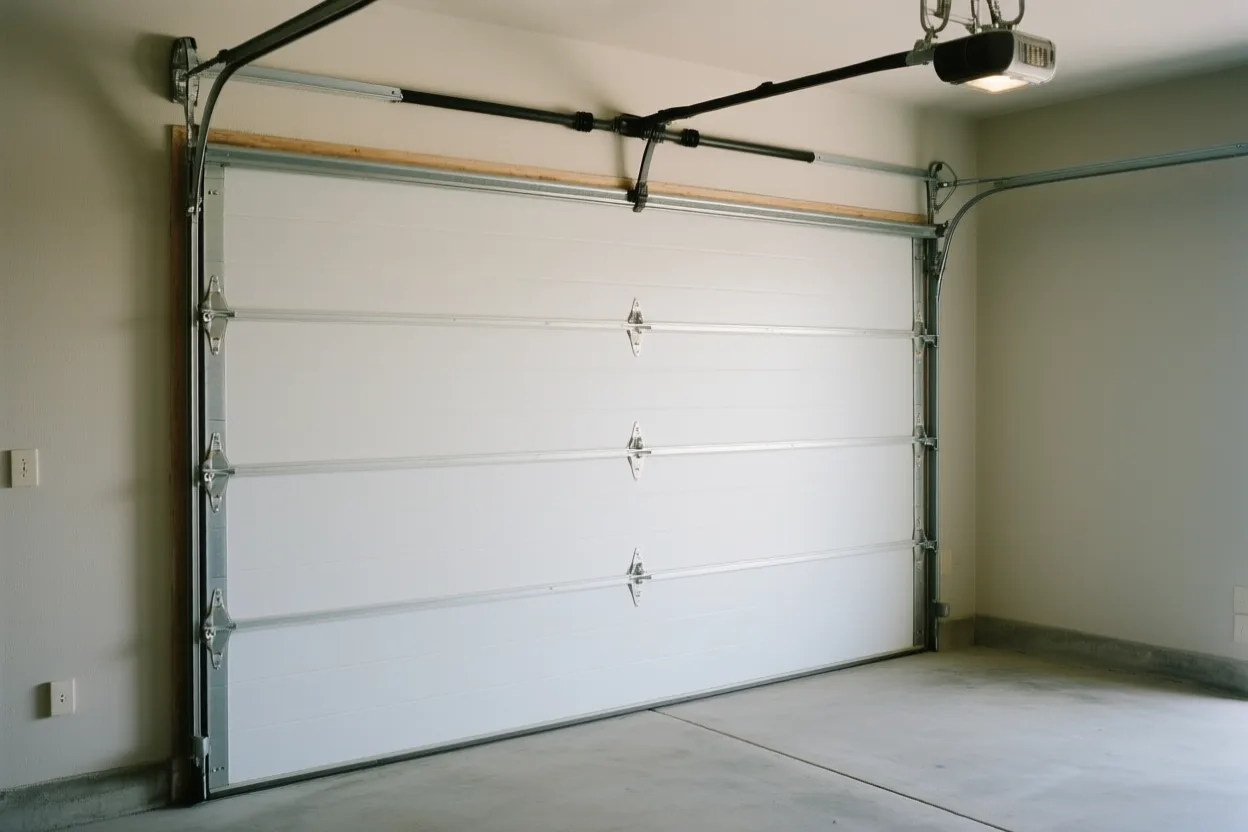
Match the panel to the door model and size, transfer the hardware from the old section, set the new panel in place, and check the hinge and track alignment while it is apart. If the impact that damaged the panel also bent the track or knocked a roller, that gets caught in the same visit.